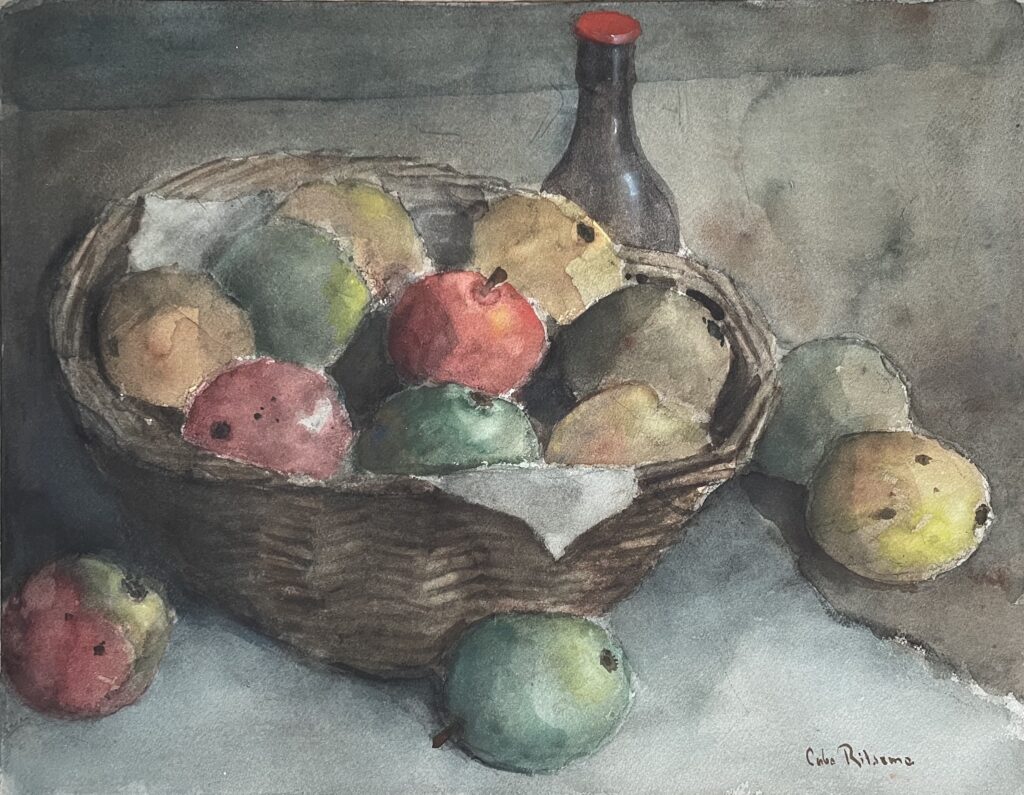
Ritsema, Coba
“Still life with basket of apples and bottle”
Year:
1900 -1960
Medium:
watercolour
Dimensions:
33,5 x 43 cm
Coba Ritsema (1876-1961) was a Dutch painter known for her portraits and still lifes, characterized by harmonious compositions, subtle use of color, and confident brushstrokes. Born on June 26, 1876, in Haarlem, she came from a family of artists and developed her skills at the Rijksakademie van Beeldende Kunsten (National Academy of Fine Arts) in Amsterdam. Ritsema's work is characterized by vibrant colors, particularly green and blue, and her subjects were often young women in quiet, introspective settings. She was a member of several prestigious art associations, including Arti et Amicitiae and the Lucas Society. Coba Ritsema was also a member of the Amsterdamse Joffers, a group of talented female artists who worked together and exhibited their work. The group's name was coined by art critic Albert Plasschaert in 1912, highlighting their collaborative spirit and artistic cooperation. The Amsterdamse Joffers included other notable artists like: Lizzy Ansingh, known for her captivating portraits and still lifes with dollhouse performances and Nelly Bodenheim who was also an important illustrator of children's books. Coba Ritsema won numerous awards, including the Willink van Collen Prize and a Royal Decoration presented by Queen Wilhelmina And her work was exhibited internationally, including in exhibitions in Brussels, Paris, and Venice. Despite her success during her lifetime, Ritsema's work fell into obscurity after her death in 1961. However, her art is being rediscovered, and the Frans Hals Museum is presenting an exhibition of her work, "Coba Ritsema: An Eye for Colour," which runs until March 1, 2026. The exhibition at the Frans Hals Museum offers a unique opportunity to see Ritsema's work and learn more about her life and artistic career. The exhibition highlights her contributions to the art world and her role as a female artist in a male-dominated field in the first half of the 20th century.